The evidence
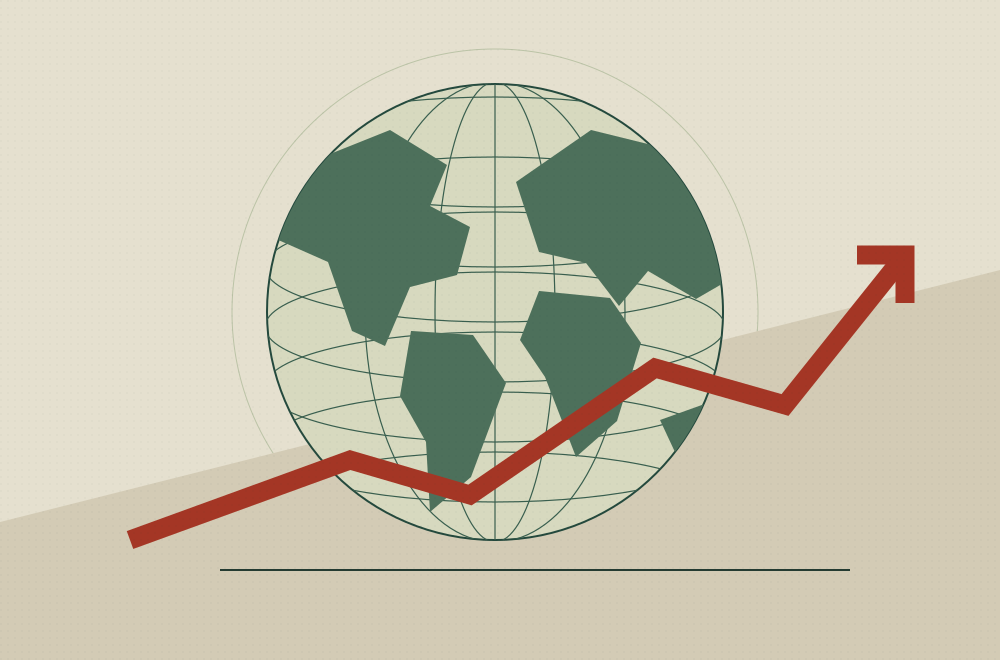
The World Trade Organization raised its 2026 merchandise trade growth forecast to 3.9% in its 8 October update, from 1.9% in March. It expects 4.1% growth in 2027. The organisation attributes the improvement to adaptable supply chains and strong investment in infrastructure that enables artificial intelligence. These are forecasts for trade volume, not increases in dollar values. [1]
The full report explains why AI investment can have an outsized effect: it is more import-intensive than many other kinds of spending. It also shows sharply uneven regional contributions. Asian economies account for more than the entire net projected increase in merchandise trade this year because negative contributions elsewhere offset some of their growth. This is an accounting result, not a suggestion that only Asia trades. [2]
The report’s 2027 outlook assumes that the effects of the Middle East conflict do not extend into that year. It explicitly warns that growth could diverge substantially if the premise fails. Reading the forecast without that condition would turn a scenario into an assurance. [2]
Our analysis
Artificial intelligence is often discussed as an intangible product: software, models and answers on a screen. The investment behind it depends on manufactured equipment, buildings and cross-border production. That creates a channel through which enthusiasm for a digital technology can support factories and exporters far from the final customer.
It also creates concentration risk. If a large share of incremental demand comes from a particular investment cycle, aggregate trade growth becomes more sensitive to the assumptions behind that cycle. This does not mean a collapse is imminent. It means a strong headline should prompt a second question: how many independent sources of demand are sustaining it?
Investors and policymakers should distinguish spending on capacity from the return earned by using that capacity. Equipment orders establish that money is being committed. They do not establish the eventual profitability of every project, the distribution of productivity gains, or the permanence of today’s demand.
The physical constraint is visible in energy infrastructure. The IEA’s Electrification report places data centres and AI among the forces driving electricity demand and identifies the growing economic importance of electric power. This connects a seemingly borderless technology to local decisions about networks, generation and industrial development. [3]
Our reading is that trade policy and technology policy can no longer be considered separately in this cycle. Restrictions on equipment, uncertainty over investment conditions, or delays in infrastructure can alter where demand appears. Businesses need to understand their position in a chain of complementary investments, rather than assume that a rising global total guarantees rising orders everywhere.
What to watch
The next useful evidence is whether trade strength spreads beyond AI-related capital goods, whether projects become operating assets, and whether the assumptions behind the 2027 forecast hold. A broad expansion would be more durable than one dependent on a narrow set of spending plans. For now, the WTO numbers show how much physical commerce is riding on a digital promise.
Sources & methodology
Primary material consulted for this article. Publication dates refer to the sources; all were checked on 17 November 2026.
- AI boom and trade resilience to Middle East crisis lift outlook, but gains to be uneven ↗WTO · 2026-10-08
- Global Trade Outlook and Statistics: October 2026 update ↗WTO · 2026-10-08
- Electrification ↗IEA · 2026-09-22
AI-researched and written analysis based on the linked sources. No original interviews or on-the-ground reporting. Forecasts are identified as forecasts; analysis is the publication’s interpretation. Read our editorial standards.